The discussion on EU enlargement and the accession of the Western Balkan states continues to gain momentum in 2026 following the EU-Western Balkans Summit in Tivat. In recent years, this region has undergone both political and economic changes that make it of interest to the European Union. The question of whether membership makes sense for the Western Balkan countries remains open. Key factors to consider include the security situation, the rule of law, and economic integration.
In addition, public opinion within the EU member states plays a decisive role in this matter. In light of geopolitical developments, it is important to examine what impact enlargement could have on existing members and to what extent this would affect the economic potential of the entire Union.
Which Western Balkan countries currently want to join the EU?
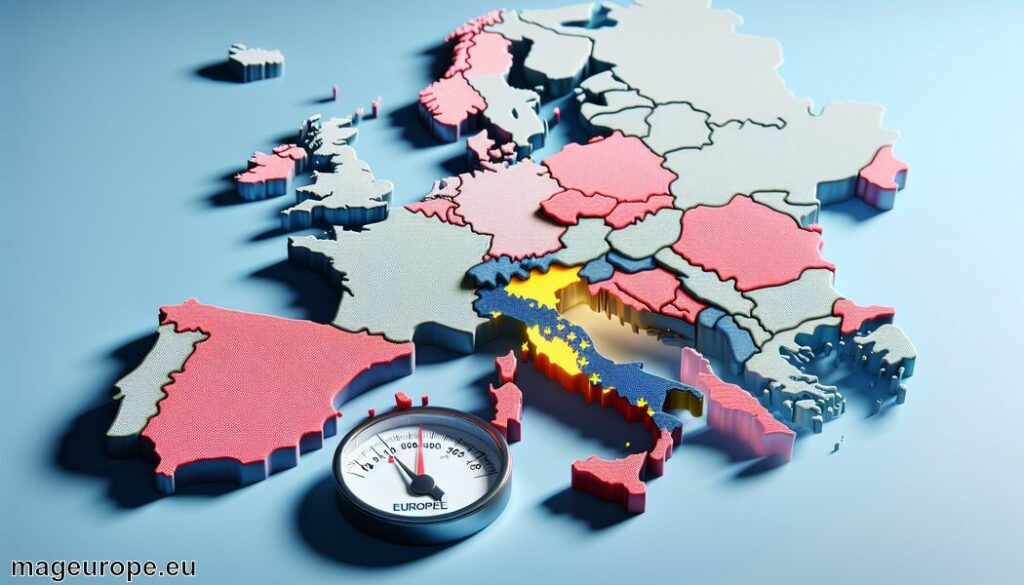
The Western Balkan countries with EU prospects include Albania, Bosnia and Herzegovina, Kosovo, Montenegro, North Macedonia, and Serbia. While they all fundamentally seek closer ties with the European Union, they are at very different stages in the accession process.
While some countries are already significantly further along, political conflicts, unresolved status issues, or shortcomings in the rule of law and administration are slowing the path toward the EU for others.
Current Status in 2026: Which Western Balkan Countries Could Be the Next to Join the EU?
The EU accession of the Western Balkan states remains a long-term process, but the prospects for individual countries vary significantly. While Montenegro is currently considered the most promising candidate, other states continue to grapple with political deadlocks, unresolved conflicts, or a backlog of reforms. There is no certain forecast, but the status as of 2026 shows which countries are closer to the goal of EU membership than others.
| Country | Status in 2026 | Possible Timeframe | Biggest hurdle |
|---|---|---|---|
| Montenegro | Currently considered the favorite among the Western Balkan countries. | Realistic at the earliest starting in 2028. | Rule of law, corruption, and the conclusion of the final negotiation chapters. |
| Albania | Has caught up in recent years and is considered another promising candidate. | More likely starting in 2029 or 2030. | Pace of reform, judicial reforms, and the fight against corruption. |
| North Macedonia | The accession process is primarily being slowed by political deadlocks. | Uncertain, likely later. | Constitutional issues and the conflict with Bulgaria. |
| Serbia | Remains an important candidate, but is under close political scrutiny. | Currently difficult to predict. | Rule of law, media freedom, relations with Kosovo, and proximity to Russia. |
| Bosnia and Herzegovina | Is still a long way from EU accession. | Unpredictable. | An unstable state structure, political deadlocks, and a backlog of reforms. |
| Kosovo | Faces the most challenging starting point in the accession process. | Unpredictable. | Non-recognition by several EU member states and the unresolved conflict with Serbia. |
The Western Balkans Summit in Tivat in June 2026
The EU-Western Balkans Summit took place on June 5, 2026, in Tivat, Montenegro. The focus was on EU enlargement, closer cooperation between the EU and the Western Balkan countries, regional stability, and the EU’s growth plan for the region.
A key message from the summit was that the EU once again reaffirmed the accession prospects of the six Western Balkan countries. Montenegro, in particular, was highlighted as a promising candidate. Montenegro’s accession to the EU by 2028 is considered possible if the country continues to implement the necessary reforms.
It also became clear that the EU is giving greater consideration to gradual integration. Western Balkan countries could thus be more closely integrated into individual EU programs, the single market, or political decision-making even before full EU accession. At the same time, it remains to be seen how quickly actual enlargement can be politically achieved.
A Brief Profile of the 6 Potential New Members
The six Western Balkan countries all have a European perspective, but are at very different stages in the accession process. The decisive factor is not merely whether a country fundamentally wants to join the EU. It is also crucial whether it meets the political, legal, and economic requirements and whether the existing EU member states would approve its accession. As of 2026, Montenegro and Albania have the best chances, while other countries still have significantly greater hurdles to overcome.
Montenegro
Montenegro is currently considered the most promising candidate for the next round of EU accession. The country is small, already a NATO member, and further along in the accession process than the other Western Balkan states. In 2026, the EU even began preparing a potential accession treaty for Montenegro; the EU considers accession by 2028 to be achievable if reforms continue.
The fact that Montenegro is not yet a member is primarily due to unresolved issues regarding the rule of law, corruption, organized crime, and the practical implementation of reforms. However, the prospects are relatively good. If Montenegro meets the final requirements and all EU member states agree, it could become the first new EU member from the Western Balkans.
Albania
Albania has also caught up in the accession process and, along with Montenegro, is among the countries that have recently received particularly positive assessments. In 2025, the European Commission highlighted that Albania has made progress on reforms and could continue to advance in the coming years if it maintains its current pace.
The biggest hurdles remain judicial reforms, the fight against corruption, public administration, and the rule of law. Albania thus has a realistic chance of being seriously considered in a future round of enlargement. However, accession immediately following Montenegro’s seems realistic only if the pace of reform remains high and the EU is politically ready for further enlargement.
North Macedonia
North Macedonia is generally considered pro-European and has made many political concessions over the years to keep the path to the EU open. Nevertheless, the country is making only slow progress. One reason is that the accession process has repeatedly been blocked by bilateral conflicts and political conditions.
Of particular importance is the dispute with Bulgaria, which involves constitutional issues, among other things. As long as this impasse remains unresolved, EU accession will be difficult to plan for. The prospects are not fundamentally poor, but at present, North Macedonia’s progress is hindered less by a lack of willingness to join the EU than by political requirements that are difficult to implement domestically.
Serbia
Serbia is one of the most politically significant countries in the Western Balkans and has been conducting accession negotiations with the EU for years. At the same time, the path forward is complicated. From the EU’s perspective, issues include the rule of law, media freedom, democratic standards, and strong domestic political polarization. In its 2025 Enlargement Package, the European Commission explicitly referred to the increasing social polarization in Serbia.
Another key issue is the relationship with Kosovo. Without a sustainable normalization of relations between Serbia and Kosovo, EU accession is unlikely to be realistic. Added to this is Serbia’s special role in foreign policy, particularly with regard to Russia. Serbia therefore remains an important candidate, but its prospects are currently much more difficult to assess than those of Montenegro or Albania.
Bosnia and Herzegovina
Although Bosnia and Herzegovina has an EU perspective, it is still a long way from accession. This is due less to any single problem than to the country’s overall political structure. The complicated system of government, deadlocks between the country’s constituent entities, and recurring conflicts over jurisdiction make reforms considerably more difficult.
From the EU’s perspective, functioning institutions, the rule of law, administrative reforms, and political stability are key prerequisites. As long as Bosnia and Herzegovina does not make significant progress in these areas, membership is unlikely to be a realistic prospect. The country’s prospects may improve if it actually implements reforms; in the short term, however, it is not among the most likely candidates for accession.
Kosovo
Kosovo faces the most challenging starting point among the six Western Balkan partners. This is due not only to reform issues but, above all, to its unresolved international status. Several EU member states still do not recognize Kosovo as an independent state. As long as this issue remains unresolved within the EU, a regular accession process will remain politically very difficult. The EU therefore continues to list Kosovo with a status-neutral footnote.
Added to this is the unresolved conflict with Serbia. Even if Kosovo makes progress on domestic policy, EU membership remains highly unrealistic without a broader political solution. The chances are therefore not ruled out in the long term, but are currently the most difficult to assess. Of all six Western Balkan states, Kosovo currently faces the greatest structural hurdles on its path to the EU.
Political Stability in the Western Balkan Countries
Political stability in the Western Balkan states is a crucial issue when it comes to EU enlargement. The region has experienced many conflicts in recent decades, which have contributed to political systems often proving fragile. Many of these countries are grappling with the legacy of past wars and the search for stable governance.
Nevertheless,efforts toward reform and integration into European structures are evident. Some countries, such as Montenegro and North Macedonia, are making progress in aligning with EU standards. However, a robust legal framework that protects democracy and human rights is considered essential for all Western Balkan countries. At the same time, challenges remain in the form of nationalist tendencies and interethnic tensions, which can strain the political climate.
These circumstances make it clear that the EU cannot focus solely on economic aspects. Political stability must be promoted to ensure successful integration and guarantee long-term peace. Cooperation and support from the European Union also play a key role in driving reform processes forward.
In-depth insights: The Future of the Eurozone: Do We Need a Fiscal Union?
The EU’s Economic Integration Goals
The EU’s economic integration goals cover a broad spectrum aimed at integrating the Western Balkan states into the European single market. Close economic cooperation could bring significant benefits to both these countries and the EU. Access to markets would open up new trade opportunities for the Western Balkan countries and promote investment.
For the EU, integrating these countries would be beneficial in supporting economic growth and stability within its borders. In particular, trade agreements and economic initiatives could help raise price levels and improve the quality of life in the region.
However, greater integration is not just a matter of market access. The implementation of necessary reforms in the areas of the legal system, corporate governance, and labor law is also crucial for successful economic convergence. Through targeted support, weaknesses can be addressed, enabling member states to achieve sustainable progress. This lays the foundation for harmonious cooperation within the European space.
| Aspect | Description | Significance |
|---|---|---|
| Political Stability | Challenges posed by domestic tensions and a fragile system of government. | Essential for successful integration into the EU. |
| Economic cooperation | Access to markets and promotion of investment. | Supports economic growth and stability in the region. |
| Rule of law | Legislation and implementation of reform-related measures. | Essential for trust within the EU. |
Security Situation in the Region
The security situation in the Western Balkans is of great importance with regard to EU enlargement. Many countries in this region have a history of political unrest and ethnic conflicts, the effects of which are still being felt. A stable security situation is crucial for the EU to maintain confidence in future integration.
A key aspect in this context is combating organized crime and terrorism, as well as promoting cross-border cooperation among states. Initiatives to strengthen security forces and police cooperation can help create a safer environment. Stability is necessary to increase the confidence of citizens and investors in these countries.
Furthermore, the geopolitical situation also plays a role, as the activities of external actors such as Russia and China can exert influence. An increased presence of international organizations can help create a balance that enables the Western Balkans to move beyond an uncertain past. In the long term, creating a secure environment is not only important for local residents but also strengthens the prospects for successful EU accession.
Migration Flows and Border Security
Migration flows in the Western Balkan states are a key issue closely linked to EU enlargement. Many people from this region seek better living conditions in Western European countries. This is due, among other things, to economic inequalities and political challenges.
Border security plays a crucial role in this context. While the EU seeks to protect its external borders, the Western Balkan states must take cooperative measures to better manage migration. Increased cooperation between these countries and the EU can help make migration routes safer and reduce illegal border crossings.
Furthermore, the importance of humane conditions for migrants is frequently emphasized. Respect for human rights must be taken into account in all measures so that an inclusive approach can be pursued. If the Western Balkan states wish to become part of the EU, they must develop mechanisms to better integrate migrants while effectively securing their borders.
Finally, all stakeholders should work toward offering the people in these countries prospects for the future, in order to prevent migration driven by the need for better living conditions.
The integration of the Western Balkan states into the EU is not only a matter of politics, but also of humanity and shared values. — Ursula von der Leyen
Interesting article: Climate Policy in Europe: Is the European Green Deal Enough?
Rule of Law and the Fight Against Corruption
The rule of law and the fight against corruption are central building blocks for the successful integration of the Western Balkan states into the EU. A transparent judiciary and an effective legal system are essential for gaining the trust of citizens and the international community. The current circumstances in many countries in this region show that reforms are necessary to strengthen the rule of law.
Corruption is a widespread problem that not only undermines political institutions but also hinders economic development. Government agencies must take decisive action against these practices by enacting appropriate laws and ensuring their enforcement. For the EU, compliance with the so-called “Copenhagen Criteria”—which define fundamental standards for the admission of new member states—is crucial.
A strong commitment on the part of the Western Balkan countries to improving the legal framework can have positive long-term effects on society. Establishing a functioning legal system promotes not only stability but also economic growth and job creation. It is therefore in the interest of all parties involved to implement clear measures to strengthen the rule of law and to consistently combat corruption.
In-depth article: The Aftermath of Brexit: Britain’s Relations with the EU in Limbo
Public Opinion in EU Member States
Public opinion on EU enlargement and the accession of the Western Balkan states varies widely. In many EU member states, there are both supporters and opponents of such integration. Many citizens emphasize that accession can create new economic opportunities, while others express concerns about migration and potential social tensions.
A point frequently raised by supporters is the prospect of stability and growth for the region itself. They see an opportunity to integrate the Western Balkans into European structures and thereby promote political and economic stability. On the other hand, some countries in Europe fear an increase in migrant numbers and potential strains on their social systems.
In addition, historical events and cultural differences play a role in the debate. There is also a certain degree of skepticism regarding these countries’ ability to implement the reforms necessary to meet EU standards. This discussion has led to intense debates across Europe, illustrating just how complex the relationship with enlargement is.
| Topic | Explanation | Relevance |
|---|---|---|
| Security Situation | Stability is necessary to foster trust in the region. | Important for future integration into the EU. |
| Migration Management | Effective management of migration between countries. | Contributes to the humane treatment and better integration of migrants. |
| Anti-Corruption | Measures to strengthen transparency and the rule of law. | Essential for public trust and international relations. |
Impact on Existing Member States
The accession of the Western Balkan states to the EU could have significant implications for existing member states. On the one hand, they face increased pressure on their social systems, particularly with regard to potential migration from these countries. Some EU citizens fear that a rise in migrant numbers could strain existing resources and infrastructure.
Another aspect is economic integration. While some member states could benefit from a new market, there are concerns about declining investment in already developed regions. The harmonization of standards may entail additional financial burdens for welfare states, as they must provide support to facilitate the transition.
There is also a risk that political tensions within the EU will increase if different nations hold divergent views on the admission and integration of the Western Balkan states. This debate could undermine solidarity among member states and thus also influence long-term decisions.
Potential Trade Benefits and Markets
A potential EU expansion to include the Western Balkan states brings numerous trade policy benefits. The integration of these countries into the European single market could lead to stronger economic cooperation. This is particularly important because the Western Balkans are geographically well-positioned and serve as a bridge between Western Europe and the Middle East.
Another advantage is access to new markets. Federal states could benefit from improved trade and investment. The removal of trade barriers would open up new business opportunities that could promote economic growth. EU member states could also gain a foothold in these emerging markets and better position their products.
Economic integration with the Western Balkan countries would also help improve the quality of life through more jobs and higher wages. Strong economic ties can also contribute to political stability in the region in the long term, which in turn would be beneficial for all parties involved. Therefore, careful consideration of the economic aspects is of great importance in the discussion regarding the admission of these countries into the EU.